 Merken
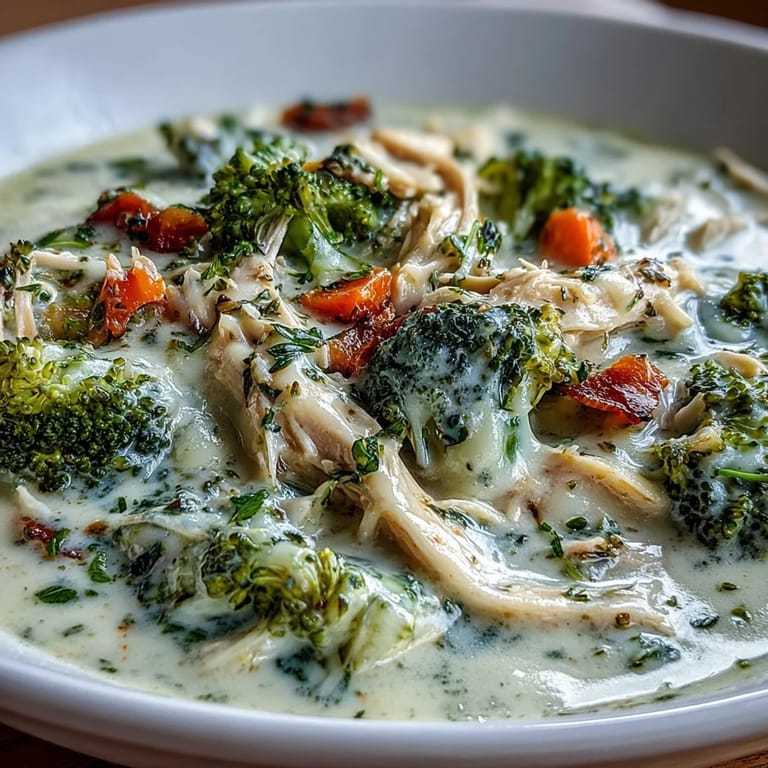
 An unexpected snowstorm knocked out our power one February afternoon, and I found myself in my kitchen with a half-empty fridge and three hungry kids. That's when I threw together what would become our go-to comfort soup—chicken, broccoli, and a generous handful of sharp cheddar that melted into pure golden warmth. It wasn't fancy or planned, but somehow that improvised pot became the thing they'd ask for every winter after that.
My neighbor brought over a container of this soup when my partner was recovering from surgery, and I watched how quickly it disappeared—three bowls before lunch was even over. That's when I realized this wasn't just a recipe; it was the kind of dish people actually want to eat when they need comfort without fuss. Now I make a double batch whenever someone's having a rough week.
Ingredients
- 2 cups cooked chicken breast, diced or shredded: Use rotisserie chicken if you're short on time—it saves 20 minutes and honestly tastes better because it's already seasoned and tender.
- 2 cups fresh broccoli florets, chopped: Fresh matters here because frozen broccoli can get mushy and lose that slight bite that makes the soup interesting.
- 1 medium carrot, peeled and diced: The sweetness balances the sharp cheddar perfectly, and cutting them small means they soften evenly.
- 1 small onion, finely chopped: Don't skip this—the onion is what gives the soup depth and makes it taste homemade rather than one-dimensional.
- 2 cloves garlic, minced: Fresh garlic only; jarred won't give you that same warmth and slight sharpness that ties everything together.
- 2 cups whole milk: The fat content matters—it keeps the soup creamy and prevents it from tasting watered down or thin.
- 2 cups low-sodium chicken broth: Low-sodium lets you control the salt and prevents the cheese from making it overly salty.
- 1½ cups sharp cheddar cheese, shredded: Sharp cheddar has actual flavor, not that mild plastic taste; shred it fresh if you can because pre-shredded has anti-caking agents that affect the texture.
- 2 tablespoons unsalted butter: Unsalted gives you control over seasoning, and butter is essential for the roux that thickens everything naturally.
- 2 tablespoons all-purpose flour or gluten-free flour: This creates the roux that makes the soup creamy without needing cream, so it's lighter than you'd expect.
- ½ teaspoon dried thyme: Thyme is subtle here but it prevents the soup from tasting too cheesy and keeps it from feeling one-note.
- ½ teaspoon paprika: Just a whisper of paprika adds color and a gentle warmth that nobody can quite identify but everyone notices.
- Salt and black pepper, to taste: Taste as you go because the cheese will season more as it melts, and you don't want to oversalt it.
Tired of Takeout? 🥡
Get 10 meals you can make faster than delivery arrives. Seriously.
One email. No spam. Unsubscribe anytime.
Instructions
- Melt the butter and soften your base:
- Drop the butter into a large pot over medium heat and let it get foamy before adding the onion, carrot, and garlic. You're looking for that golden moment when the vegetables start releasing their smell and the onion turns translucent—usually about 4 to 5 minutes. Don't rush this step because it's building the flavor foundation.
- Make the roux:
- Sprinkle the flour over the vegetables and stir constantly for 1 to 2 minutes until it looks like wet sand and smells nutty and toasted. This roux is what keeps the soup from being watery, so don't skip the stirring.
- Add the liquids slowly:
- This is where patience matters—whisk the chicken broth and milk in gradually while you're constantly stirring so no lumps form. If you dump it all in at once, you'll end up with little flour bombs floating around, which is frustrating to fix.
- Cook the broccoli and seasonings:
- Add the broccoli, thyme, paprika, salt, and pepper, then bring everything to a simmer and let it cook for 10 to 12 minutes until the broccoli is tender but not mushy. You'll know it's right when a fork slides through easily but the florets still hold their shape.
- Bring in the chicken and warm through:
- Stir in your cooked chicken and let it warm for another 5 minutes—this isn't about cooking the chicken; it's just bringing everything to the same temperature so it tastes cohesive.
- Melt the cheese gently:
- Take the pot off the heat first, then gradually stir in the shredded cheddar in handfuls until it's completely melted and silky. If you add the cheese to boiling liquid, it can get grainy and separated, which breaks the whole creamy magic.
- Taste and adjust:
- Before serving, taste it and add more salt, pepper, or a pinch of thyme if something feels missing. Every broth is different, so trusting your palate is part of making it feel like your own recipe.
 Merken
 My sister called me in tears one evening, overwhelmed by everything happening at once, and the only thing I could think to do was make this soup and show up at her door with a pot and fresh bread. We didn't talk about much; we just sat together with bowls of warmth in our hands, and somehow that was exactly what was needed. That's when I understood why people think of soup as love in a bowl.
Variations That Work Beautifully
The bones of this recipe are flexible enough to become something entirely different depending on what's in your kitchen or what season you're cooking for. I've swapped broccoli for cauliflower, added diced potatoes for more substance, and once threw in a handful of spinach at the end because it was about to wilt and it became this bright, unexpected addition that nobody asked me to make but everyone wanted. The cheese stays the star, and everything else is just dancing around it.
The Secret to Creamy Without Being Heavy
Most people think you need heavy cream or loads of butter for creaminess, but the real trick is the roux and the cheese together—the flour thickens the liquid naturally while the cheese adds richness and flavor without needing extra fat. I learned this accidentally when I tried making a lighter version for someone watching their diet, and honestly, it tasted better than the original. The soup feels luxurious on your tongue but doesn't leave you feeling weighed down afterward.
Serving and Pairing Ideas
This soup is perfect alongside a crusty piece of bread for dipping, or paired with a simple green salad if you want something lighter on the side. I've also poured it over rice or egg noodles when I wanted to stretch it further, and both turned it into something almost stew-like and even more satisfying. The cheddar flavor is strong enough that it doesn't need fancy garnishes, but a sprinkle of fresh thyme or a crack of black pepper just before serving makes people think you fussed more than you actually did.
- Make it ahead and freeze it for up to three months—just thaw and reheat gently so the cheese doesn't separate.
- Blend half the soup before adding the cheese if you want it silkier and more refined-looking for company.
- Leftovers actually taste better the next day once all the flavors have settled together.
 Merken
 There's something about a pot of this soup simmering on the stove that makes a house feel like home, even on the worst days. It's the kind of recipe that becomes part of your life, not just something you make once and forget.
Häufige Fragen zum Rezept
- → Kann ich die Suppe einfrieren?
Ja, die Suppe lässt sich bis zu drei Monate einfrieren. Am besten vor dem Hinzufügen des Käses portionieren, da dieser beim Auftauen körnig werden kann. Käse frisch beim Erwärmen einrühren.
- → Welches Hühnchen eignet sich am besten?
Gekochtes Hähnchenbrustfilet works perfekt, aber auch Brathähnchenfleisch vom Vortag eignet sich hervorragend und spart Zeit. Das Fleisch sollte in mundgerechte Stücke gewürfelt oder gezupft werden.
- → Wie kann ich die Suppe cremiger machen?
Für extra Cremigkeit kann die Hälfte der Suppe vor dem Hinzufügen von Käse und Hühnchen püriert werden. Alternativ mehr Cheddar oder einen Schuss Sahne hinzufügen. Die Mehlschwitze sorgt bereits für eine gute Bindung.
- → Welche Beiladen passen gut dazu?
Frisches Bauernbrot oder knusprige Crostini eignen sich hervorragend zum Dippen. Ein leichter Salat mit Vinaigrette rundet das Mahl perfekt ab. Für mehr Sättigung können auch Kartoffeln hinzugefügt werden.
- → Kann ich Brokkoli durch anderes Gemüse ersetzen?
Blumenkohl ist eine ausgezeichnete Alternative mit ähnlicher Konsistenz. Erbsen, Mais oder gehackte grüne Bohnen ergänzen die Suppe ebenfalls gut. Für mehr Farbe können verschiedene Gemüsesorten kombiniert werden.