 Merken
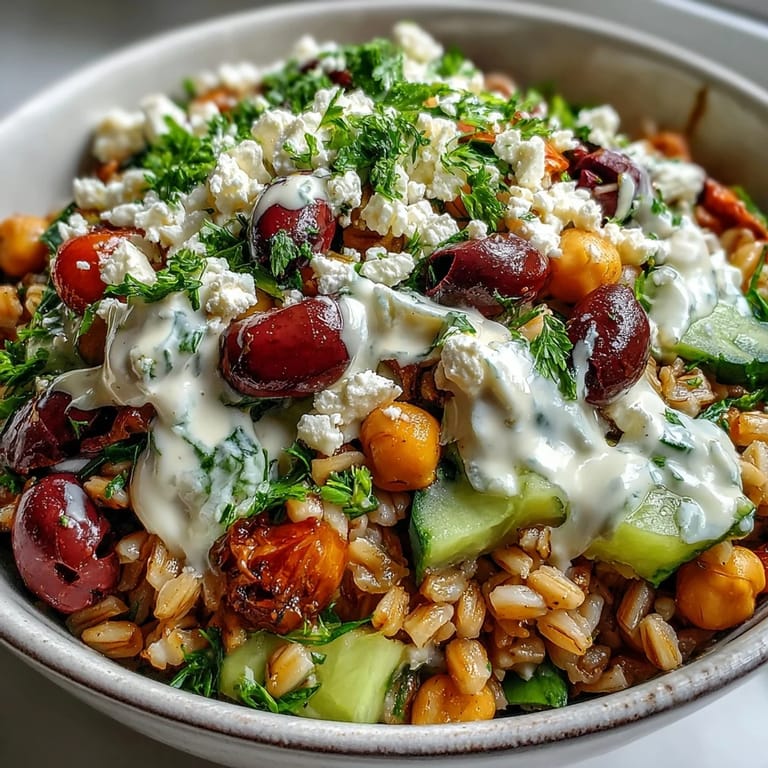
 There's something about standing in a Mediterranean market—the chaos of vendors calling out, the smell of sun-warmed olives and fresh herbs mixing together—that made me realize how simple, honest food doesn't need to be complicated. Years later, when I wanted to recreate that feeling at home on a Tuesday evening, I started building this farro bowl almost by instinct, layering flavors and textures until it felt right. It became the dish I reach for when I want something that tastes like sunshine but doesn't demand hours in the kitchen.
I made this for my sister's surprise dinner party when she mentioned craving something light but satisfying, and watching everyone go back for seconds while barely touching the bread basket told me everything. The bowl's charm is how it feels effortless to serve—each person can adjust their own plate, make it hotter or colder, add feta or leave it off—while you get to stand around talking instead of being stuck at the stove.
Ingredients
- Farro: Nutty and substantial, it holds up to the dressing without turning mushy, though rinsing it first keeps things from getting cloudy.
- Vegetable broth: Don't shortcut with water here—it's the foundation that makes the farro taste intentional rather than plain.
- Cherry tomatoes: Halving them releases just enough juice to dress the bowl naturally as you eat.
- Cucumber: Watery and cool, it balances the richness of tahini and keeps each bite feeling fresh.
- Red bell pepper: Sweet and crisp, it adds both crunch and color that looks almost edible before you've even tasted it.
- Kalamata olives: Briny and essential—they're the soul of this bowl, so don't skip them or substitute with something milder.
- Red onion: Thin slices stay sharp and bright, awakening every other flavor in the mix.
- Baby spinach: Soft enough to wilt slightly from the warm farro but substantial enough not to disappear.
- Chickpeas: Toasted or straight from the tin, they're your anchor protein, though grilled chicken or crumbled tofu work just as well.
- Tahini: Creamy, earthy, and the glue holding everything together—use good quality sesame paste, not the separated kind.
- Lemon juice: Freshly squeezed cuts through the tahini's density and brightens the whole bowl.
- Extra-virgin olive oil: One of the few places where the good stuff actually matters.
- Garlic and cumin: Together they hint at spice markets without shouting, keeping the bowl Mediterranean rather than making it feel like something else.
- Feta: Crumbly and salty, it adds a finish that feels intentional, though it's easy to omit for vegan versions.
- Fresh parsley: A small green gesture that makes the bowl look like someone who cares made it.
Tired of Takeout? 🥡
Get 10 meals you can make faster than delivery arrives. Seriously.
One email. No spam. Unsubscribe anytime.
Instructions
- Toast and simmer the farro:
- Rinse your farro under cold water, then pour it into a medium saucepan with vegetable broth and bring everything to a boil. The moment it bubbles, lower the heat, cover it, and let it simmer quietly for 25 to 30 minutes until each grain is tender but still has a slight chew to it. If there's excess liquid pooling at the bottom when you're done, drain it off and let the farro cool slightly while you prep everything else.
- Prepare your vegetables with intention:
- While the farro cooks, halve your cherry tomatoes, dice the cucumber and bell pepper into roughly the same size pieces, slice the red onion paper-thin, and pit and slice the olives. Keeping your knife work consistent makes everything look like it belongs together on the same plate.
- Whisk the dressing until silky:
- In a small bowl, combine tahini, fresh lemon juice, olive oil, and a tablespoon of water, then mince in your garlic clove and add a generous pinch of ground cumin. Whisk vigorously until the mixture is smooth and pourable—it should pour like honey, not sit like cement. If it's too thick, add a little more water until it cooperates.
- Assemble the bowl with confidence:
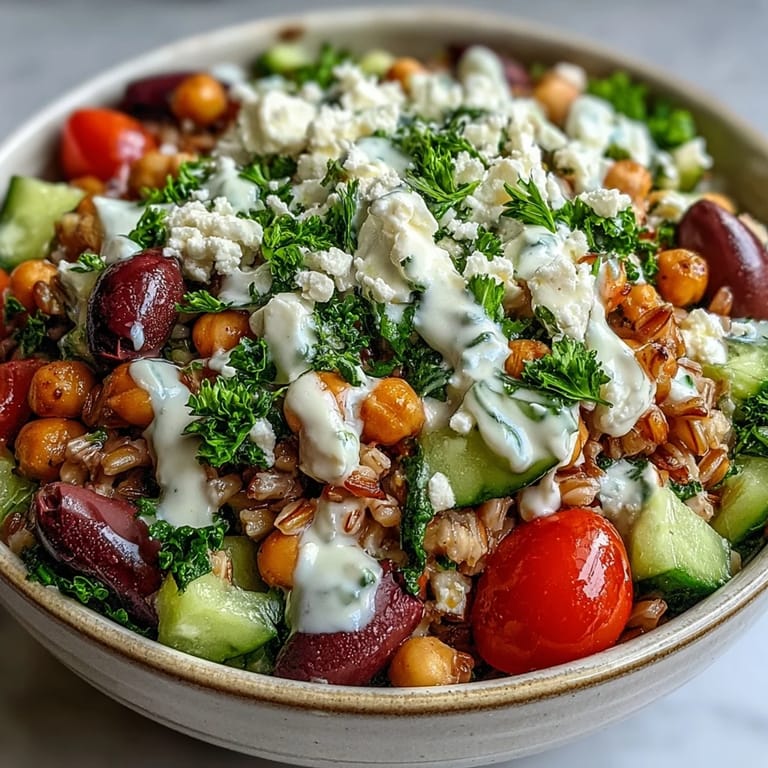
- In a large bowl, combine your cooled farro with all the vegetables, olives, spinach, and chickpeas. Pour the tahini dressing over everything and toss gently—you're not making a salad here, just coating each component lightly so nothing gets lost.
- Plate and garnish:
- Divide the mixture among four bowls, then sprinkle feta cheese and fresh parsley over the top of each one. The garnish is where the bowl finally feels finished, so don't skip it even if you're tired.
 Merken
 One evening, a friend who'd been stressed all week ate three bowls of this in near silence, and afterward she said she felt like her body had been waiting for exactly this combination of things. That moment taught me that sometimes the most nourishing food isn't about technique or fancy ingredients—it's about respecting what you're putting together and trusting that simplicity can be profound.
Why This Bowl Works as Meal Prep
The farro absorbs flavors as it sits, so if you make this on Sunday, Monday's leftovers actually taste better than the day you assembled it. The vegetables stay crisp because they haven't released all their water yet, and the tahini dressing continues to coat everything evenly. Keep the feta and parsley separate until you're ready to eat, then sprinkle them on to maintain their texture—this small step makes a two-day-old bowl taste nearly as good as the first serving.
Building Your Own Variations
The beauty of this bowl is how willingly it accepts changes without losing its identity. Roasted eggplant or charred zucchini can replace the bell pepper, grilled shrimp or chicken breast can swap in for chickpeas, and even the dressing adapts—tahini with harissa adds heat, tahini with yogurt adds creaminess, and a simple lemon olive oil vinaigrette works if you're out of sesame paste. Think of the recipe as a template rather than a rule, and let what's in your kitchen or what you're craving that day guide your hand.
Serving and Storage Wisdom
This bowl is equally at home as a warm lunch eaten straight from the saucepan or chilled as an afternoon snack when you want something filling but light. It keeps in the refrigerator for up to two days, though the longer it sits, the more the farro will absorb the dressing and the softer everything becomes—which some people prefer and others find less appealing. If you're serving it to guests, consider assembling individual bowls rather than making one large one, so everyone can admire what they're about to eat before digging in.
- Bring the dressing to room temperature before serving if you've refrigerated it, as cold tahini feels heavy on the tongue.
- A warm pita or piece of flatbread alongside turns this from a bowl into almost a meal you can eat with your hands.
- If you have fresh herbs like mint or dill in your kitchen, scatter those over the top instead of parsley—the bowl welcomes that generosity.
 Merken
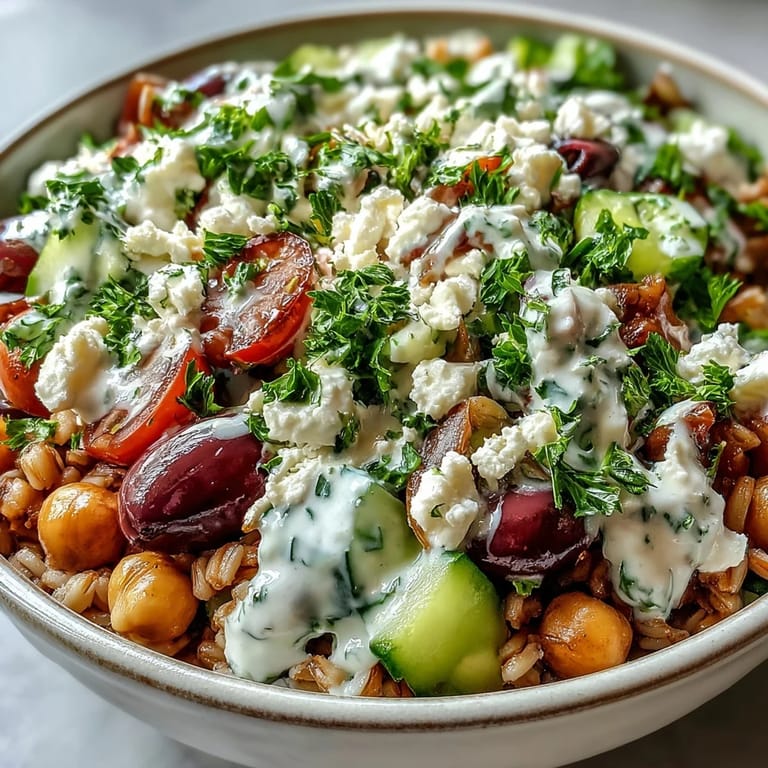
 This bowl became my answer to those moments when you want to cook something real but don't have hours to spend thinking about it. It's the kind of dish that reminds you why Mediterranean food endures—because it's built on things that taste good together and respect your time.
Häufige Fragen zum Rezept
- → Was genau ist Farro?
Farro ist ein antikes Getreide, das aus Weizen stammt. Es hat einen nussigen Geschmack und eine angenehm zähe Konsistenz nach dem Kochen. In Italien ist Farro ein Grundnahrungsmittel und wird häufig in Salaten, Suppen und Schalen verwendet.
- → Kann ich dieses Gericht glutenfrei zubereiten?
Ja, ersetzen Sie einfach den Farro durch Quinoa, Reis oder glutenfreie Getreidealternativen. Die restlichen Zutaten sind natürlich glutenfrei. Achten Sie darauf, dass Ihre Gewürze und Brühe tatsächlich glutenfrei sind.
- → Wie lange hält sich die Farro-Schale im Kühlschrank?
Die vorbereitete Schale hält sich bis zu 2 Tage in einem verschlossenen Behälter im Kühlschrank. Bewahren Sie das Dressing separat auf, wenn Sie das Gericht für mehrere Tage vorbereiten möchten. Vor dem Servieren gut umrühren.
- → Welche Proteinalternativen funktionieren gut?
Neben Kichererbsen passen gegrilltes Hähnchen, Garnelen, Tofu oder auch weiche Eier hervorragend zu diesem Gericht. Für eine veganere Variante können Sie einfach mehr Kichererbsen oder Bohnen verwenden.
- → Kann ich das Dressing im Voraus zubereiten?
Absolut! Die Tahini-Soße hält sich im Kühlschrank bis zu einer Woche. Lagern Sie sie in einem verschlossenen Glas. Vor dem Gebrauch eventuell etwas Wasser hinzufügen, da sie sich im Kühlschrank etwas verfestigen kann.