 Merken
 An entire bulb of garlic roasting in foil is something I stumbled into by accident, honestly. I was making tomato soup on a chilly afternoon and grabbed a head of garlic without thinking, then realized midway through that I could just toss the whole thing in the oven instead of mincing cloves. The kitchen filled with this sweet, almost nutty smell that made the soup taste completely different from every version before it. Now when someone asks me for a comforting soup recipe, this is the one I describe with that particular warmth in my voice.
I made this for my neighbor once on a day when her garden was overflowing with tomatoes and she didn't know what to do with them. We roasted them together while she told me stories about her summers growing up, and by the time we blended everything, the whole thing felt less like cooking and more like a conversation that happened to produce soup. She still texts me photos of her tomatoes in August.
Ingredients
- Ripe tomatoes (1.5 lbs): Use whatever color you can find at peak ripeness; underripe ones will make the soup taste thin and sour.
- Yellow onion (1 large): The sweetness caramelizes beautifully under high heat and balances the tomato's natural acidity.
- Garlic bulb (1 whole): Roasting mellows the sharpness completely; this is the soul of the soup.
- Olive oil (2 tbsp): Good olive oil matters here because you taste it distinctly in the finished soup.
- Heavy cream (1/2 cup): Swirl it in at the end for that silky finish, or use coconut cream if you prefer vegan.
- Vegetable broth (2 cups): Homemade is superior but store-bought works; choose low-sodium so you control the salt yourself.
- Salt and pepper: Season in layers rather than all at once, tasting as you go.
- Sugar (1/2 tsp, optional): Keep this close if your tomatoes are acidic; a tiny pinch can shift the entire balance.
- Smoked paprika (1/4 tsp, optional): Adds a whisper of smoke that deepens the roasted flavor.
- Fresh basil and croutons (for garnish): These finish the dish and turn a simple soup into something that feels intentional.
Tired of Takeout? 🥡
Get 10 meals you can make faster than delivery arrives. Seriously.
One email. No spam. Unsubscribe anytime.
Instructions
- Heat your oven and prepare the vegetables:
- Set the oven to 400°F and arrange tomato halves cut side up on a baking sheet with onion wedges. Slice off the top of the garlic bulb just enough to expose the cloves, drizzle lightly with oil, wrap it in foil, and set it on the sheet too.
- Season and roast:
- Drizzle the tomatoes and onions with olive oil, sprinkle with salt and pepper, and slide everything into the oven for 35 to 40 minutes until the edges are dark and caramelized and the kitchen smells like concentrated summer. The garlic will be soft enough to squeeze out of its skin when it cools slightly.
- Blend into velvet:
- Once everything has cooled just enough to handle, squeeze the roasted garlic cloves from their papery skins into a blender along with the tomatoes, onions, and vegetable broth. Blend until completely smooth, working in batches if your blender is small; there's no rush here.
- Finish with cream and heat:
- Pour the blended soup into a large pot, stir in the heavy cream and smoked paprika if using, and let it simmer gently over medium-low heat for about 10 minutes. Taste it now, and if it feels sharp or acidic, add a tiny pinch of sugar and stir; adjust salt and pepper until it tastes right to you.
- Serve with intention:
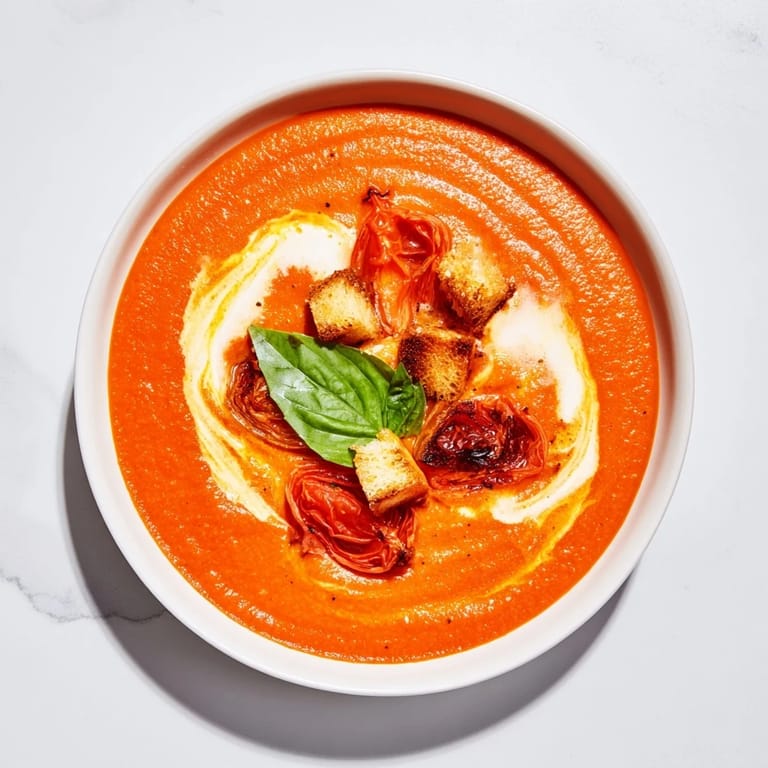
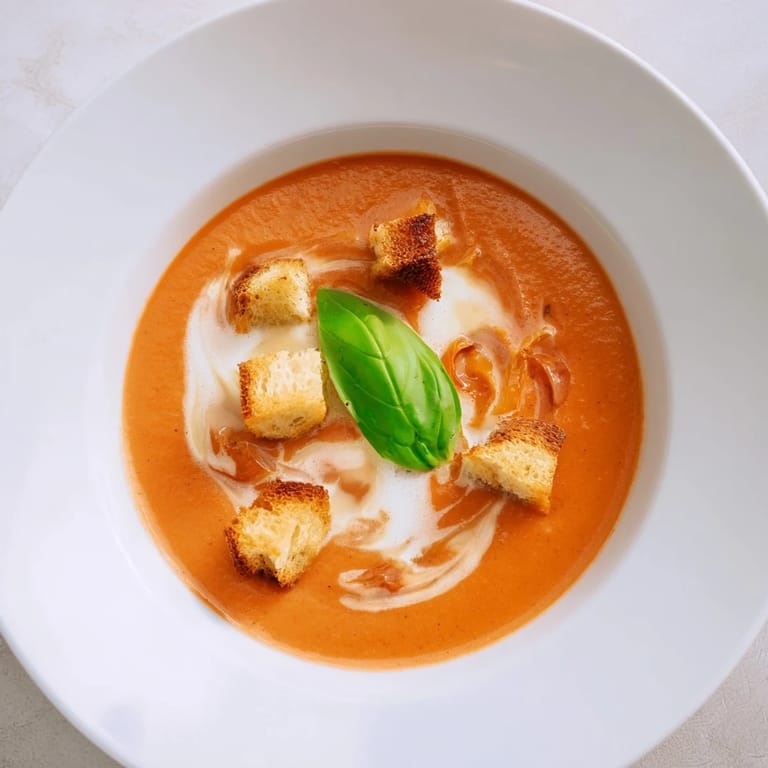
- Ladle into bowls and top with fresh basil torn by hand and croutons or toasted bread if you have them. The soup should be hot and steaming, the cream should be visible as a gentle swirl, and the smell should make people want to eat it immediately.
 Merken
 There's a moment near the end of cooking when you lean over the pot and the steam rises into your face carrying all that roasted garlic and tomato, and you realize why people crave comfort food. This soup is that moment in a bowl.
Why Roasting Changes Everything
Raw tomatoes and garlic have bite and sharpness; roasting them slowly transforms those qualities into sweetness and depth. The water content evaporates, the sugars concentrate and caramelize, and what you end up blending is not the same ingredient you started with. This is the foundation of the recipe, and understanding it means you'll never make thin, acidic tomato soup again.
Cream Swirls and Variations
The heavy cream is where personalization begins. Some days I use less cream and a splash of good olive oil instead; other times I use coconut cream for richness without dairy, and the soup tastes completely different but equally good. Cashew cream works too if you've made it, and it adds a subtle nuttiness that pairs beautifully with the roasted garlic. The soup is adaptable enough to become what you need it to be, which is part of why I've made it so many times.
Pairing and Serving Ideas
This soup transforms when you pair it with something to dunk into it—grilled cheese sandwiches are the obvious choice, but crusty bread with burrata, or even a simple white bean salad, works too. The warmth and creaminess make it a complete meal rather than just a starter, which is why I often make a large batch and serve it casually on weeknights when the weather turns cold.
- Make croutons by tossing bread cubes in olive oil and roasting them at the same temperature as the vegetables.
- Fresh basil should be torn by hand just before serving so it doesn't bruise and turn dark.
- Leftover soup keeps for five days and tastes even richer the next day once the flavors have settled.
 Merken
 This is the kind of soup that makes your kitchen smell like care and intention, and that smell alone is worth the hour it takes to make. Serve it when you want people to feel taken care of, because somehow that's what this soup does.
Häufige Fragen zum Rezept
- → Wie lange werden die Tomaten und der Knoblauch geröstet?
Die Tomaten und der Knoblauch werden etwa 35-40 Minuten im Ofen geröstet, bis sie weich und karamellisiert sind.
- → Kann die Sahne durch eine pflanzliche Alternative ersetzt werden?
Ja, für eine vegane Variante können Kokos- oder Cashewmilch als Sahneersatz verwendet werden.
- → Welche Gewürze passen gut zu dieser Suppe?
Salz, schwarzer Pfeffer, geräucherter Paprika und bei Bedarf eine Prise Zucker zur Geschmacksbalance harmonieren sehr gut.
- → Wie bewahre ich übrig gebliebene Suppe am besten auf?
Im Kühlschrank hält sich die Suppe gut verschlossen bis zu 3 Tage und lässt sich vor dem Servieren erneut erwärmen.
- → Welche Beilagen empfehlen sich zum Servieren?
Frisches Basilikum und knusprige Croutons oder getoastetes Brot ergänzen die Suppe ideal.